domingo, 13 de junho de 2021

ALUNOS REDIGEM O TESTE

 https://www.edutopia.org/article/using-student-generated-questions-promote-deeper-thinking

Using Student-Generated Questions to Promote Deeper Thinking


Asking students to create their own questions has a powerful impact on learning. Plus, 5 tips to encourage high-quality questions.

September 24, 2020
An illustration concept of philosophical questions
Leigh Wells

You’ve seen a penny hundreds, if not thousands, of times. But can you draw one from memory?

In a famous decades-old study, adults were asked to draw a U.S. penny without any aids. Although they were confident that they knew what a penny looked like, their performance on the test was “remarkably poor.” And when shown pennies with slightly different characteristics, such as misplaced text or with Lincoln’s portrait facing the wrong direction, few were able to identify the inaccuracies.

It’s a maddening quirk of human memory: We’re often convinced that we know something, but upon closer examination, it’s just an illusion. And this, of course, is no surprise to teachers, who often encounter students who overestimate how well they know a topic.

Understanding how people learn and reliably commit things to memory is what prompted psychology professor Mirjam Ebersbach and her colleagues at the University of Kassel to study how students prepare for an exam, and what strategies yielded the optimal improvements in student learning.

In a recent study, Ebersbach and her research team randomly assigned 82 university students to one of three groups. In the restudy group, students simply revisited and restudied the material from a lesson in their psychology course. In the testing group, students studied the material and then took a short 10-question quiz. In the last group, students studied the same material and then created their own probing questions.

One week later, all of the students took a test on the material. Students in the restudy group scored an average of 42 percent on the test, while students in the testing and generating questions groups both scored 56 percent—an improvement of 14 percentage points, or the equivalent of a full letter grade.

“Question generation promotes a deeper elaboration of the learning content,” Ebersbach told Edutopia. “One has to reflect what one has learned and how an appropriate knowledge question can be inferred from this knowledge.”

STRONGER MEMORY TRACES

Why is generating questions so effective? Past studies reveal that learning strategies that require additional cognitive effort—retrieval practice, elaboration, concept mapping, or drawing, for example—encourage students to process the material more deeply and consider it in new contexts, generating additional memory traces that aid retention.

Yet the most commonly used strategies are also the least effective. In the study, students filled out a survey identifying the learning strategies they typically used when studying for exams. By far, they said that taking notes and restudying were their go-to strategies—a surprisingly common finding that’s been regularly reported in the research. Less than half as many mentioned practice tests, and only one student among 82 mentioned generating questions.

Passive strategies such as rereading or highlighting passages are “superficial” and may even impair long‐term retention, Ebersbach explained. “This superficial learning is promoted by the illusion of knowledge, which means that learners often have the impression after the reading of a text, for instance, that they got the messages. However, if they are asked questions related to the text (or are asked to generate questions relating to the text), they fail because they lack a deeper understanding,” she told Edutopia.

That lasting “impression” of success makes it hard to convince people that rereading and underlining are, in fact, suboptimal approaches. They register the minor benefits as major improvements and hold fast to the strategies, even when the research reveals that we’re wrong.

GETTING STUDENTS TO GENERATE PRODUCTIVE QUESTIONS IN CLASS

While generating questions is an effective study strategy, it also can be adapted into a classroom activity, whether online or in person.

Here are five ideas to incorporate student-generated questions into your classroom.

Teach students how to ask good questions: At first, it can be difficult for students to generate their own questions, and many will start with simple yes/no or factual prompts. To encourage better questions, ask students to think about and focus on some of the tougher or more important concepts they encountered in the lesson, and then have them propose questions that start with “explain” or that use “how” and “why” framing. Direct your students to road-test their questions by answering them themselves: Do the questions lead to longer, more substantive answers, or can they be answered with a simple “yes” or “no”?

A bonus: Students who propose questions and then answer them to test their soundness are also relearning the materials more deeply themselves. Very sneaky.
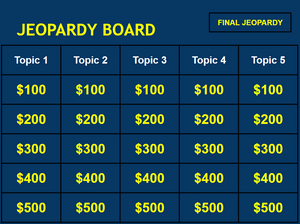
A teacher-created Jeopardy game designed with Google Slides.
Eric Curts
A teacher-created Jeopardy game designed with Google Slides.

Play Jeopardy!: Research shows that active learning strategies, such as using the format of the popular game show Jeopardy! to review concepts, not only boosts student engagement but also increases academic performance. You can involve students by asking them to write the questions themselves.

To create the game, specialized software isn’t even necessary: The researchers in the study used the wiki feature in the class’s learning management system to create a 6x5 table with each cell containing a question. Similarly, you can use PowerPoint or Google Slides to create the Jeopardy! game grid. Here’s a handy template.

Have students create their own test and quiz questions: Is it cheating if students write the questions to the exam? In a 2014 study, researchers evaluated a strategy whereby students not only developed the learning materials for the class but also wrote a significant part of the exams. The result? A 10 percentage point increase in the final grade, attributed largely to an increase in student engagement and motivation. Popular tools like Kahoot and Quizlet are fun and convenient ways to create quizzes, no matter if your classroom is in person, hybrid, or virtual.

Improve class-wide discussions: In a 2018 study, students were asked to write questions based on Bloom’s taxonomy; questions ranged from lower-order true/false and multiple-choice questions to challenging questions that required analysis and synthesis. The students not only enjoyed the exercise—many called it a “rewarding experience”—but also scored 7 percentage points higher on the final exam, compared with their peers in other classes.

Use some class time to identify the characteristics of higher-order questions; then collect student questions and discuss some of the more challenging ones as a group.

Get at ‘driving questions’: For Andrew Miller, a former high school teacher and current administrator at an international pre-K–12 school, taking a page out of project-based learning and asking students to create driving questions—such as “Why do leaves have different shapes?”—not only enhances their understanding of the topic but also “creates interest and a feeling of challenge” that can draw in even the most reluctant students.

Teachers As Learners


Ron Berger - Teachers As Learners


CRITICAR

Ron Berger - Rules For Critique


CRITICAR


     3 REGRAS

          SER amável, específico e útil


sábado, 12 de junho de 2021

Encontro Nacional com a Ciência e a Tecnologia 2021

Encontro Ciência 2020 - Resumo 3 e 4 novembro

 Com:

· Manuel Heitor, Ministro da Ciência, Tecnologia e Ensino Superior · Comissários Encontro Ciência 2020: Helena Canhão, Professora, NOVA Medical School, Universidade Nova de Lisboa e Pedro Oliveira, Professor, Copenhagen Business School e Cátedra Gulbenkian na Nova School of Business and Economics O Encontro Ciência tem como objetivo principal promover o debate alargado dos principais temas e desafios da investigação, formação e inovação em Portugal. Neste evento reúnem-se investigadores e académicos, num ambiente interativo e participativo, com envolvimento de empresas e público em geral, quer em regime presencial, quer em regime online. Neste ano de 2020, queremos debater como a Ciência pode ajudar a recuperar Portugal. Esta iniciativa é promovida pela Fundação para a Ciência e a Tecnologia em colaboração com a Ciência Viva e a Comissão Parlamentar de Educação e Ciência, e conta com o apoio institucional do Governo através do Ministro da Ciência, Tecnologia e Ensino Superior.

Encontro Nacional com a Ciência e a Tecnologia


O Ciência 2021 é a nova edição do encontro anual da ciência, tecnologia e inovação em Portugal, que decorrerá de 28 a 30 de junho de 2021, no Centro de Congressos de Lisboa.

Este ano o país convidado é a França, que participará ativamente no programa, destacando o intercâmbio e a forte cooperação científica existente entre os dois países.

O tema do evento, “A Ciência que faz o Amanhã e transforma a Economia”, lança o mote para os principais temas, desafios e oportunidades da ciência em 2021 que se faz em Portugal e na Europa. Do futuro do emprego à exploração espacial e à transição climática, diversos serão os tópicos abordados para estimular a interação e o diálogo entre todos os participantes.

O Ciência 2021 está organizado em diferentes tipos de sessões, de plenárias a temáticas, passando também por comunicações, demonstrações e pósteres online . As seis sessões plenárias cobrem as principais dimensões do tema central do evento, tratando questões que têm particular relevo em 2021. No contexto incerto associado à pandemia de COVID-19, temas como o posicionamento da ciência e da economia no quadro do Plano de Recuperação Económico são basilares. Estas sessões contarão com a participação de oradores com percursos internacionalmente reconhecidos nas suas áreas respetivas, e incluirão, em particular, intervenientes portugueses e franceses colocando assim em evidência a colaboração luso-francesa do evento.

O programa incluirá também 26 sessões temáticas em paralelo destacando parcerias internacionais de universidades, empresas e outras entidades nacionais. A participação das instituições I&D portuguesas será particularmente ativa online através das comunicações e demonstrações de atividades de I&D e de pósteres dos estudantes de doutoramento bolseiros financiados pela Fundação para a Ciência e a Tecnologia.

O Ciência 2021 é promovido pela Fundação para a Ciência e a Tecnologia em colaboração com o Ciência Viva e com a Comissão Parlamentar de Educação, Ciência, Juventude e Desporto, contando ainda com o apoio institucional do Ministério da Ciência, Tecnologia e Ensino Superior.

Neste fórum, esperamos potenciar o envolvimento de investigadores, empresários, estudantes e do público em geral, para promover a discussão de ideias e preparar num esforço coletivo o futuro da Ciência e da Tecnologia, tanto em Portugal como na Europa.


Comissão organizadora do Ciência 2021


Comissão organizadora

David Braga Malta

Fundador da LiMM, Cell2B e BoostPharma

Marta Oliveira

Especialista em segurança de lançadores no Porto Espacial Europeu com a Vitrociset

Paula M. Alves

CEO do iBET e professora na Universidade NOVA de Lisboa

(ITQB e FCT-NOVA)

     PROGRAMA

Dia 1: 2ª feira, 28 de Junho

9-11h: Sessão 1 – Abertura: Ciência e inovação: um continuum em articulação

Abertura:

  • Paula Alves , IBET
  • David Braga Malta , P-Bio
  • Marta Oliveira , ESQS, FR

Intervenções iniciais

  • Manuel Heitor , ministro da Ciência, Tecnologia e Ensino Superior
  • Frédérique Vidal , Ministra da Ciência e do Ensino Superior, França

Intervenções convidadas:

  • Sangeeta Bhatia (remota), MIT
  • Christophe Gregoire, Sanofi Pasteur
  • John Gordon, Senior Director, Innovation Lab Lead, IDM Pfizer
  • Henrique Veiga-Fernandes , Fundação Champalimaud

Moderação: David Braga Malta, P-BIO

Encerramento:

  • António Costa , Primeiro Ministro
  • Entrega de medalhas de mérito científico,
  • Mariana Vieira da Silva , ministra de Estado e da Presidência


17h30-19h: Plenária 2 – A ciência, o futuro do emprego e a coesão territorial

Intervenções convidadas:

  • Paulo Marques , Chief Technology Officer da Feedzai
  • Manuel Carvalho da Silva , coordenador do CoLABOR
  • Olivier Crouzet, Head of Pedagogy, 42 Born to code (Escola42)

Moderação: Helena Pereira, presidente da FCT

Encerramento:

  • Ana Abrunhosa, ministra da Coesão Territorial
  • Ana Mendes Godinho , ministra do Trabalho, Segurança Social e Solidariedade


Dia 2: 3ª feira, 29  de Junho

9-11h: Plenária 3 – A ciência e a economia: recuperação e resiliência 2021-2027

Abertura:

  • Elisa Ferreira , comissária europeia da Política de Coesão e Reformas
  • Elvira Fortunato , I3N, Universidade NOVA de Lisboa

Intervenções convidadas:

  • Lars Montelius , diretor do INL
  • Guy Villax , presidente da Hovione; presidente do Conselho Consultivo da ANI
  • Maria Mota , diretora do IMM
  • Isabel Furtado , CEO da TMG; presidente do CA do CEIIA; presidente da COTEC

Moderação: Joana Mendonça, presidente da ANI

Encerramento:

  • Pedro Siza Vieira , ministro de Estado, da Economia e da Transição Digital

17h30-19h: Plenária 4 – A ciência e os novos desafios da interação espaço-clima: da observação da Terra ao clima espacial

Abertura:

  • Marta Oliveira , ESQS, FR
  • Rodrigo da Costa (remoto), Executive Director EUSPA 

Intervenções convidadas:

  • Jean-Jacques Favier , astronauta
  • Zita Martins, Instituto Superior Técnico
  • João Pinero e Pedro Silva , AIR Centre
  • Tiago Oliveira , presidente da AGIF

Moderação: Ricardo Conde, presidente da Agência Espacial Portuguesa, PT Space

Encerramento:

  • João Matos Fernandes , ministro do Ambiente e da Ação Climática


Dia 3: 4ª feira, 30  de Junho

9-11h: Plenária 5 – Ciência, agricultura e alimentação: desafios para a transição ecológica

Abertura:

  • Isabel Ferreira , secretária de Estado da Valorização do Interior

Intervenções convidadas:

  • Vitor Espírito Santo Eat Just, San Francisco
  • James Taylor , INRAE Montpelier
  • Teresa Pinto Correia , CHANGE, Universidade de Évora
  • Gabriel Marais , BIOPOLIS
  • Carlos Faro , BIOCANT

Moderação: Rosalia Vargas, presidente da Ciência Viva 

Encerramento

  • Maria do Céu Antunes, ministra da Agricultura

17h30-19h: Plenária 6 – A ciência cura: desafios e oportunidades da interação ciência-saúde   

Abertura:

  • Paula Alves , IBET
  • Marta Temido , ministra da Saúde

Intervenções convidadas:

  • Kathrin Jansen, Senior Vice-President, Pfizer
  • José Otero CSO, TurnStone
  • Rui Henrique , director do IPO Porto, Porto Comprehensive Cancer Center
  • Miguel Garcia , Technopage

Moderação: Catarina Resende Oliveira e Patrícia Calado, AICIB

Entrega de premios Arquivo FCT

Encerramento:

  • Marcelo Rebelo de Sousa , Presidente da República

domingo, 28 de março de 2021

Ciclo de Webinares - AREAL - 7.º e 10.º ANOS


Veja ou reveja as sessões do Ciclo de Webinares.


A importância das Geociências na Sociedade
Ver Webinar
O papel da mulher na construção das Geociências – o caso da Paleontologia
Ver Webinar
Saídas de campo virtuais em ambiente Google Earth - Serra da Freita (Arouca)
Ver Webinar


Saídas de campo virtuais em ambiente Google Earth - Sintra, Mafra e Litoral da Arrábida
Ver Webinar


A Biologia e a Geologia nos objetivos de desenvolvimento sustentável
Ver Webinar
À conversa com… Os nossos alunos: O manual escolar de Biologia e Geologia
Ver Webinar
Alterações climáticas: mitigação ou adaptação?
Ver Webinar


AULA ABERTA: Aprendizagem imersiva com a Realidade Virtual e Aumentada: Ferramentas e práticas

Caro (a) Participante Bom dia Já está disponível o VÍDEO e o PDF da AULA ABERTA : Aprendizagem imersiva com a Realidade Virtual e Aumentada:...